

“Sport has the power to change the world.”
-Nelson Mandela
Sports are more than for persons with disabilities (PWDs). They can build confidence, independence, discipline, social connections, and a sense of achievement. In our series on accessible architecture, we offer insights into what goes in designing a sports complex for the specially abled persons.
Importance of accessibility: Most of the benefits of playing sport remain inaccessible when sports infrastructure itself creates barriers. An accessible sports complex must go beyond ramps and accessible toilets. It should be planned around universal design principles, enabling people with different physical, sensory, and intellectual disabilities to participate safely and independently.
Accessibility for Different Categories of PWDs
1. Persons with physical disabilities
- Wheelchair users and people with mobility limitations need step-free routes for parking and public transport to entrances, reception areas, changing rooms, spectator zones, and playing fields.
- Ramps, appropriately design lifts, wide doorways, accessible toilets, changing rooms, showers, and lockers are essential. Sports surfaces should be firm, stable, and slip-resistant.
- The government of India’s sports accessibility guidelines lay recommendations about approach routes, parking, entrances, circulation, ramps, toilets, changing rooms, spectator seating and emergency evacuation.
2. Persons with Visual disabilities
- Navigation for visually impaired people can be made easier through the use of tactile pathways, detectable warnings, high-contrast signage, braille information, audible announcements and consistent spatial layouts.
- It’s essential that obstacles do not project into pedestrian routes. Audio cues can be used to assist athletes in sports like goalball and athletics.
3. Persons With Hearing Disabilities
- Visual information is important for people with hearing disabilities. Safety and participation can be improved through the use of digital display boards, visual alarms, captioned announcements, sign-language support and clear line-of-sight communication.
- Emergency warnings should never depend entirely on sound.
4. Persons with intellectual, developmental or psychosocial disabilities
- Designers must ensure simple and predictable circulation, clear pictorial signs, quieter spaces, adequate lighting and easily understandable instructions to reduce anxiety and confusion.
- Staff should be trained to communicate respectfully and provide assistance without actually taking away independence of an athlete.
Features to be avoided
- Accessibility cannot be an afterthought. It is essential to avoid steep or poorly finished ramps, inaccessible parking, narrow circulation routes, slippery floors, confusing signage, inaccessible spectator seatings, and toilets located too far for comfort.
- Avoid relying on a single accessible entrance or lift. Excessive glare, complicated wayfinding, and abrupt changes in floor level should also be avoided.
- Do not design accessibility without consulting PWDs and sports professionals. Real users can identify barriers that even regulations may overlook.
A model example: Gwalior Centre of Excellence for Disability Sports
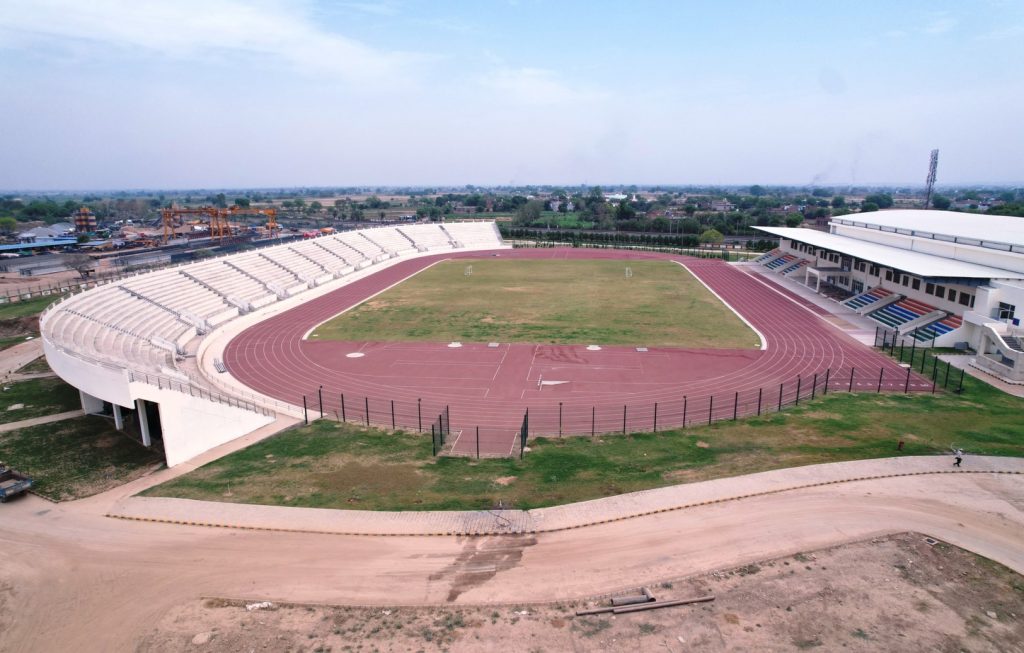 The Centre of Excellence for Disability Sports at Gwalior, now the Atal Bihari Vajpayee Training Centre for Disability Sports, demonstrates how accessibility can become the foundation of sports infrastructure.
The centre was conceived as as an international-level facility with specialized infrastructure for Divyang sportspersons. The campus includes athletics, tennis, swimming, multipurpose halls, sports-science facilities, physiotherapy, classrooms, a gym and accommodation.
The sports complex was designed by Nirman Consultants Pvt. Ltd., whose portfolio identifies the Gwalior Centre for Disability Sports as a stadium project. The government’s original project plan included indoor and outdoor sports, aquatic facilities, medical and sports-science support, accessible lockers, dining and recreational facilities.
Other good examples: The Centre of Excellence for Disability Sports, Shillong is another example of accessible infrastructure designed around multiple disability sport disciplines, combining indoor and outdoor facilities. This centre plays an important role in preparing athletes for national and international competition.
How accessible sports infrastructure changes lives
Disability becomes less restrictive when athletes can enter a building independently, reach the playing field, train with peers and compete without confronting physical barriers. Achievement on the sports field can translate into confidence in education, employment and everyday life.
Accessible sports facilities also benefit society. They encourage participation, reduce social isolation and create opportunities for athletes, coaches, families and communities to interact on equal terms.
Inclusive design serves PWDs and also children, older people, injured athletes and anyone with temporary mobility limitations.
Accessible sports infrastructure plays a crucial role in making persons with disabilities integral part of the entire society. These athletes bring laurels to the country and establish themselves as equal citizens and proud individuals. We shall keep sharing intricacies of accessible design in our future posts. Stay connected.
Sources
- Department of Empowerment of Persons with Disabilities – Accessibility Standards and Guidelines
- Atal Bihari Vajpayee Training Centre for Disability Sports, Gwalior
- Gwalior Centre – Aims and Objectives
- Nirman Consultants – Project Portfolio
- Government of India – Gwalior Centre for Disability Sports
About the author
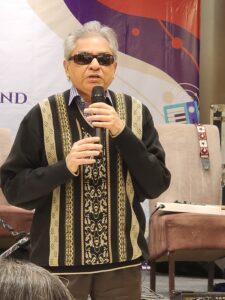 Sandeep Singh is an architect from IIT Roorkee. He is a prolific writer and a sensitive poet. His professional posts mostly cover the future in Architecture. His books are chiefly devoted to the inner and outer battles that a disabled person in India faces every day. His poems mostly reflect his inner world. He also manages NGOs focussed on livelihood to remote areas, empowerment of women, inclusive tourism and support to small businesses.