
“Architecture should speak of its time and place, but yearn for timelessness.”
-Frank Gehry.
Distilleries are where science, craftsmanship, architecture, and time quietly collaborate to transform humble grains into liquid heritage. Behind every bottle lies a story of tradition, innovation, and meticulous design.
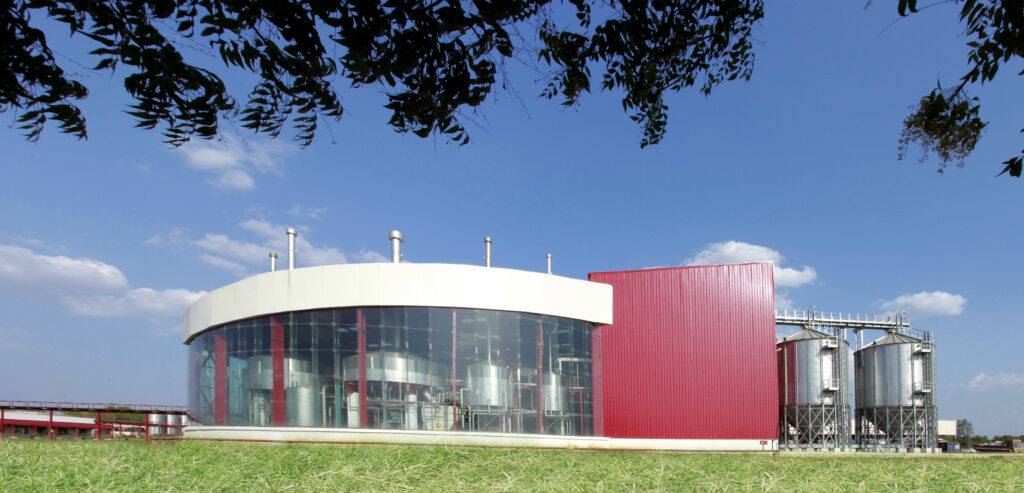
Here’s the fascinating story of the creation of a distillery where tradition flows as smoothly as the spirit itself: The Kals Distillery, Trichy, designed by Nirman Consultants. The distillery won the most beautiful distillery award at an exhibition in Europe at the time.
An expression of technological innovation, environmental responsibility, and cultural identity
Kals distillery exemplifies the evolution of modern vision by blending modern industrial efficiency with thoughtful architectural planning, sustainability initiatives, and contextual sensitivity to its regional setting. The project represents a contemporary approach to industrial architecture where production, environmental responsibility, and aesthetics co-exist.
Project overview
The Kals Distillery Facility is part of the operations of Kals Distilleries Pvt. Ltd., a major manufacturer of alcoholic beverages like brandy, whisky,

rum, and beer. It has multiple manufacturing facilities across India and established itself as a key supplier in the southern markets, especially Tamil Nadu. The Trichy distillery complex was conceived as a modern industrial campus that could support large-scale production while maintaining environmental and operational efficiency. The architectural and engineering design by Nirman Consultants focuses on integrating production infrastructure, utilities, circulation networks, and landscape planning into a cohesive industrial ecosystem.
The architecture of the distillery focuses on functionality, modularity, and visual clarity: key aspects of contemporary industrial design.
Integrated Industrial Layout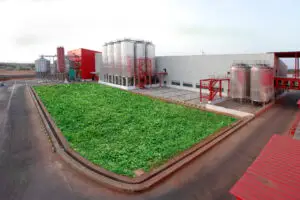
The facility is primarily organized around a rational industrial layout that separates raw material handling, fermentation, distillation, storage, and packaging zones. This zoning ensures smooth process flow and minimizes cross-contamination risks, crucial in beverage manufacturing. Wide internal circulation corridors and service yards allow for efficient movement of tankers, raw materials, and finished goods. The site planning also aims to integrate logistics infrastructure, such as loading bays and warehousing to ensure uninterrupted supply-chain operations.
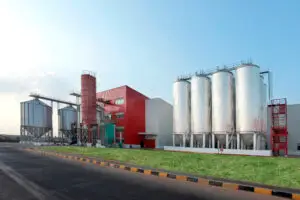 Modern industrial aesthetics
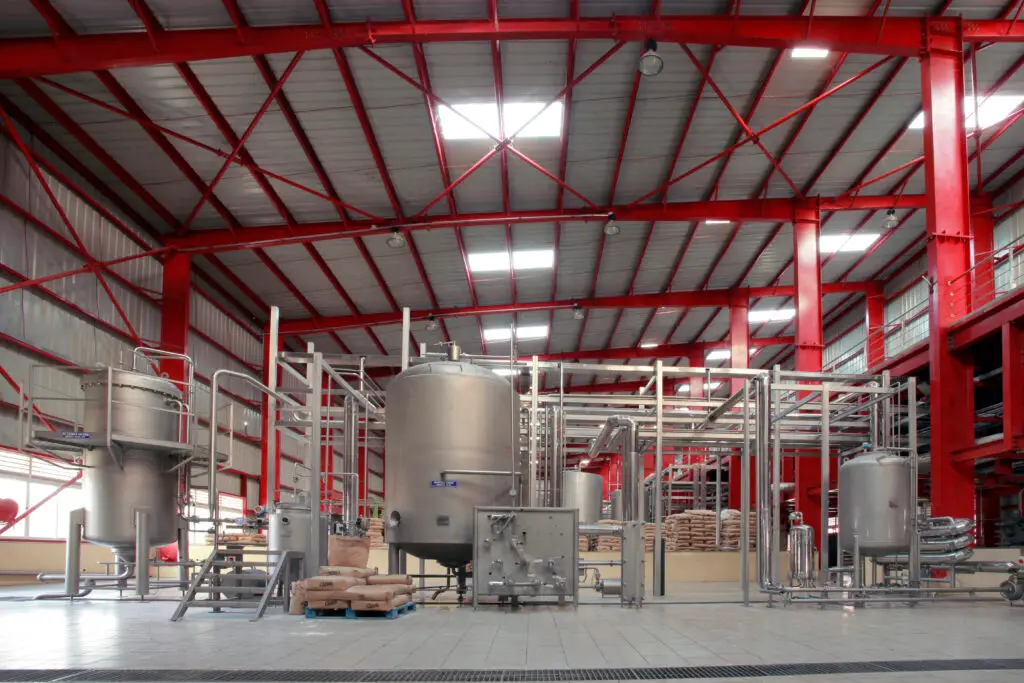
Nirman Consultants adopted a modern industrial architectural language that is characterized by clean geometric forms, metal and concrete structural systems, functional facades with louvers and shading devices suited to local climate, and large-span production halls. These features create expansive interiors required for fermentation tanks, bottling lines, and storage systems while maintaining a visually coherent architectural identity.
Structural Efficiency
The design achieves large column-free spans through steel structural systems and truss frameworks. These allow flexible equipment layouts and future expansion.
Sustainability and Environmental Features
Sustainability is a defining component of the distillery’s design strategy. Industrial facilities traditionally consume large quantities of water and energy, but contemporary plants integrate environmental safeguards.
Zero-discharge Philosophy
The facility adopts a zero liquid discharge (ZLD) approach to waste water management. Affluent generated during distillation and cleaning processes is treated and recycled. This significantly reduces the environmental impact of operations.
Water Recycling Systems
Distilleries require large amounts of process water. Advanced treatment systems are used to reuse water in cooling towers, utilities, and non-potable operations. Such strategies reduce reliance on fresh water resources.
Energy Efficiency
The use of energy-efficient equipment, insulated piping systems, and optimized process layouts reduce overall energy demand. Natural ventilation and daylighting strategies further reduce electricity consumption.
These measures demonstrate how industrial architectural can be environmentally responsible without compromising operational performance.
Community Engagement and Regional Impact
Industrial projects in rural or semi-urban regions can play an important role socio-economic development. The Kals Distillery contributes to the local economy through employment generation and supply-chain participation. The facility provides direct and indirect jobs in manufacturing, logistics, maintenance, and administration. Local farmers and suppliers also benefit through procurement networks related to raw materials and agricultural inputs. The project’s presence also supports regional infrastructure development, including improved roads, transportation connectivity, and service ecosystems.
The architecture reflects its Tamil Nadu context in a subtle way.
Locally available materials and construction practices were used wherever possible. This helped reduce transportation costs and support regional industries.
Climate-responsive Design
The hot tropical climate of the Trichy region influenced the following design decisions:
- Provision of shaded facades and sun-control devices
- Ensuring cross-ventilation in utility and service areas
- Using durable materials suited to high heat and humidity
These strategies help reduce cooling loads and improve operational comfort for workers.
Landscape Integration
If proper consideration is not given, industrial campuses can often appear visually harsh and unattractive. Kals project incorporates landscape zones, green buffers, and plantation areas to soften the industrial character of the site while helping manage dust and micro climate conditions.
Industrial Architecture as a Design Statement The Kals Distillery demonstrates that industrial facilities can go beyond utilitarian structures. The project integrates manufacturing efficiency with sustainability and architectural clarity through strategic planning and thoughtful design. Nirman Consultants has created a facility that can act like a role model for modern industrial architecture in India by balancing process-driven infrastructure with environmental considerations and contextual responsiveness.
Kals Distillery highlights how architecture can elevate industrial environments, transforming them into responsible, future-ready infrastructures.
Sources
- KALS Group – About and Manufacturing Facilities
https://www.kals.co.in/about-kals-group.html (KALS Group) - KALS Group – Official Website
https://www.kals.co.in (KALS Group) - KALS Distilleries Pvt Ltd – Company Information
https://www.zaubacorp.com/KALS-DISTILLERIES-PRIVATE-LIMITED-U15511TN2007PTC065347 (ZaubaCorp) About the author
Sandeep Singh is an architect from IIT Roorkee. He is a prolific writer and a sensitive poet. His professional posts
mostly cover the future in Architecture. His books are chiefly devoted to the inner and outer battles that a disabled person in India faces every day. His poems mostly reflect his inner world. He also manages NGOs focussed on
livelihood to remote areas, empowerment of women, inclusive tourism and support to small businesses.