
“Civilization begins with distillation.”
William Faulkner.
From ancient alembics to modern marvels, distilleries have long captured the imagination of humankind, transforming the simple agricultural produce into spirits that reflect both cultural fragrance and economic power. The journey from rudimentary stills to today’s high-tech plants can be summed up as a fascinating chronicle of science, tradition, and innovation.
Ancient origins: The birth of distillation
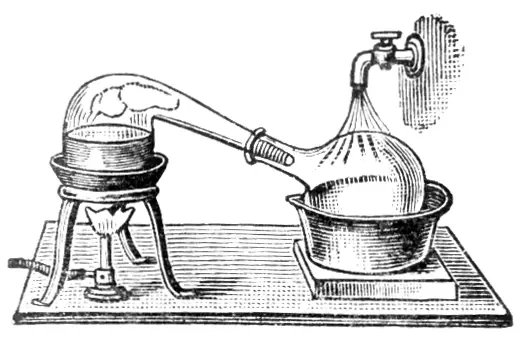
Distillation is defined as the process of heating a liquid to create vapor and then cooling it back into liquid. It’s believed to have originated in Mesopotamia and Egypt around 2000BCE. It actually didn’t start with alcohol, but perfumes, essential oils, and medicines that were distilled initially. The alembic still, perfected by Arabic Alchemists around the 8th century, laid the foundation for extracting alcohol with greater purity and efficiency.
Distillation spread into Europe by the middle ages through scholars and traders. Monasteries became early distillation centers, they started producing medicinal spirits known as aqua vitae (the water of life). These early elixirs were prescribed as remedies before people gradually started using them for leisure and enjoyment.
The rise of traditional distilleries
Distilleries began to move out of monastic settings by the 15th-16th centuries into small workshops. Scotland and Ireland emerged as leaders in whisky while France perfected brandy-making. Some of the classic examples from the era are listed below:
- Bushmills Distillery, Northern Ireland (1608): Considered one of the oldest licensed distilleries in the world, Bushmills became synonymous with fine Irish whisky.
- Glenlivet, Scotland (1824): A pioneer in single malt scotch, Glenlivet set standards that inspired countless distilleries across the globe.
- Remy Martin, France (1724): Remy Martin is a benchmark of Cognac tradition, blending craftsmanship with the local character.
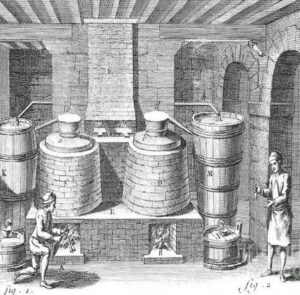
These early distilleries relied on copper-made pot stills, small-scale fermentation, and wood-fired furnaces. Production was as much an art as a science, master distillers relying on sensory skills passed down through generations to impart a unique taste and texture to the liquor.
 Industrial expansion
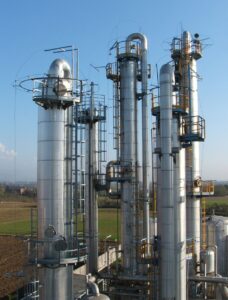
The 19th century industrial revolution transformed distilling into a large-scale enterprise. The invention of the continuous still (Coffey or column still) in the 1830s revolutionized production. Unlike traditional pot stills, continuous stills were able to operate without interruption, producing higher volumes and lighter, more consistent spirits.
This innovation gave a boost to rum production in the Caribbean, whisky in America, and gin in England. Distilleries like Jack Daniel’s, Tennessee (1866), and Bacardy, Cuba (1862) became well known worldwide, reflecting the expanding markets for spirits in the modern world.
Modern distilleries: Combining heritage with technology
Today’s distilleries strive to balance centuries-old traditions with cutting-edge technology. Computerized monitoring, energy-efficient systems, and sustainable practices now define production. Yet, the essence of distilling, transforming grains, fruits, or sugar cane into spirits with character, remains unchanged.
Some outstanding modern examples are listed below:
- The Macallan Distillery, Scotland (Redesigned in 2018): A striking example of architectural design and sustainable production, the distillery merges heritage with futuristic aesthetics.
- Maker’s Mark, Kentucky, USA: Known for its innovation in branding and quality consistency while still staying rooted in traditional bourbon-making.
- Nikka Whisky, Japan (1934): Nikka exemplifies how craftsmanship and modern sensibilities can create world-class spirits even outside the traditional European and American regions.
Craft distilleries have also surged globally, from Brooklyn to Bengaluru, reviving small-batch artistry while embracing eco-friendly practices. The highlights of this breed of distilleries are solar-powered stills, water recycling systems, and organic sourcing.
A timeless craft

The history of distilleries showcases the humanity’s ability to blend curiosity with culture. An initiative that began as an alchemic experiment thousands of years ago has blossomed into a global industry that generates billions, promotes innovation, and preserves traditions.
Whether it’s sipping a smoky scotch from Islay, a smooth bourbon from Kentucky, or a contemporary gin infused with exotic botanicals, each glass holds a piece of history. From clay vessels in ancient Mesopotamia to gleaming copper stills in today’s plants, the spirit of distilling continues evolve, always honoring past values while shaping the future.
We, at Nirman, will continue to bring blog posts on relevant, interesting topics with fascinating facts, don’t miss the fun!
Sources
https://en.wikipedia.org › wiki › Distillation
https://vinepair.com › spirits-101 › history-of-distilling
https://www.thewhiskyexchange.com › … › Region guides
https://specificengineering.com › news › blog › the-hist…

About the author
Sandeep Singh is an architect from IIT Roorkee. He is a prolific writer and a sensitive poet. His professional posts mostly cover the future in Architecture. His books are chiefly devoted to the inner and outer battles that a disabled person in India faces every day. His poems mostly reflect his inner world. He also manages NGOs focussed on livelihood to remote areas, empowerment of women, inclusive tourism and support to small businesses.